
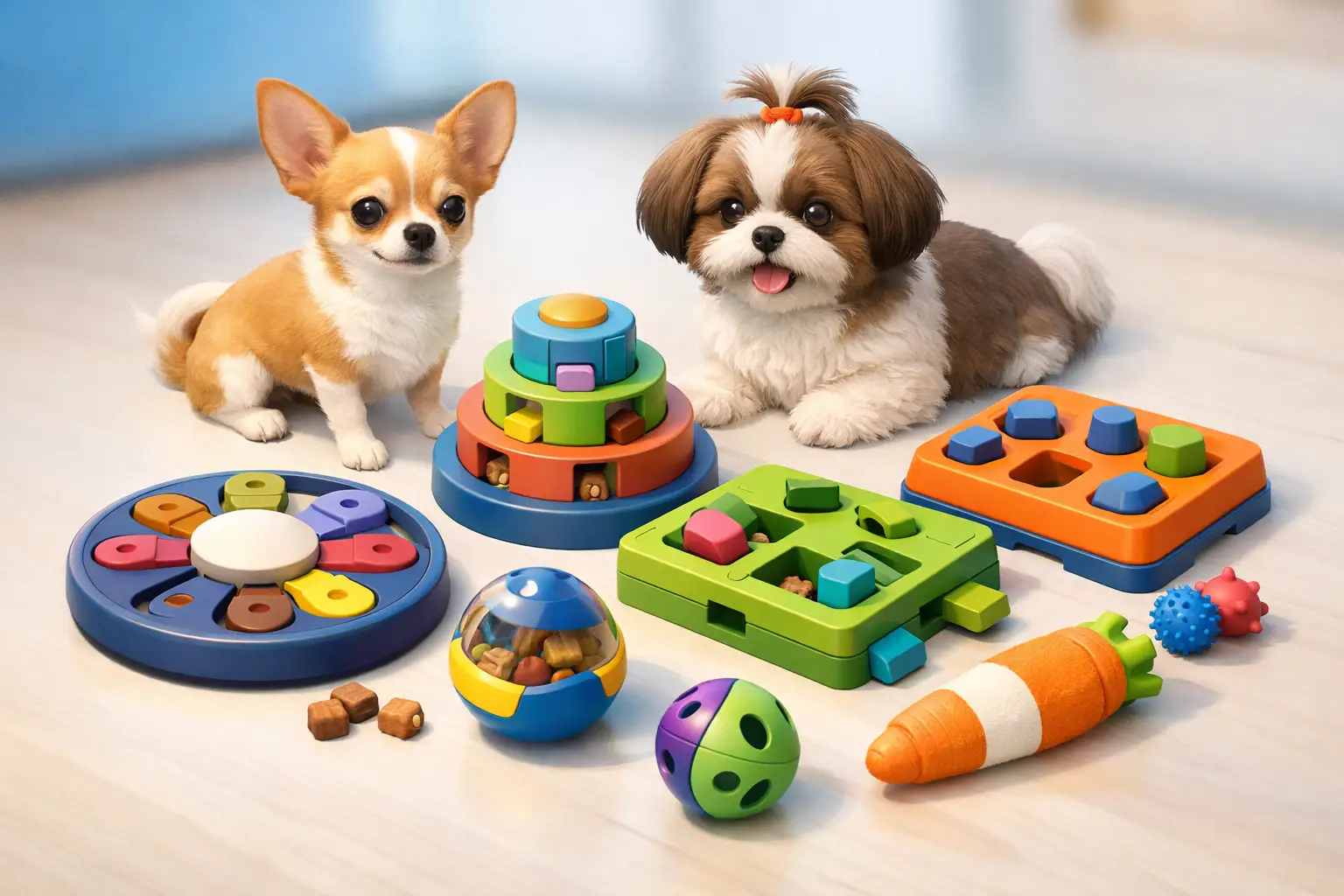
A bored small dog rarely stays quietly bored. That extra energy usually shows up as barking at the window, chewing the corner of a rug, shadowing you from room to room, or turning bedtime into a second wind. The right mental stimulation toys for small dogs can help redirect all of that restless energy into something calmer, healthier, and far more manageable at home.
Small dogs are often underestimated in this category. Because they take up less space and may need shorter walks than larger breeds, people sometimes assume they need less enrichment. Usually, the opposite is true. Many small breeds were developed to alert, chase, problem-solve, or stay closely engaged with humans. They notice everything, learn quickly, and get frustrated just as quickly when their day feels repetitive.
A pile of plush toys is fine for entertainment, but it is not the same as mental work. Mental enrichment asks your dog to make choices, use scent, solve a problem, or stay focused long enough to earn a reward. That process matters because it tires the brain in a different way than a walk around the block.
For apartment dogs, senior small breeds, and pups who spend part of the day alone, enrichment can be one of the easiest ways to create a more balanced routine. It helps take the edge off boredom, but it can also support confidence and calmer behavior. A dog that has an appropriate outlet for curiosity is often less likely to invent one.
That does not mean every toy labeled interactive will be a great fit. Size, noise level, durability, and difficulty all matter more with smaller dogs. A toy that works beautifully for a Lab may be frustrating, physically awkward, or even unsafe for a dog with a tiny mouth and delicate jaw.
The best option starts with scale. Your dog should be able to grip, nudge, lick, or paw at the toy without struggling. If openings are too large, compartments are too deep, or pieces are too heavy, the toy stops being enriching and starts becoming confusing.
Material matters too. Small dogs vary a lot in how they play. Some are delicate nibblers. Others are surprisingly intense chewers packed into a ten-pound frame. Soft puzzle toys can be great for gentle dogs, while firmer rubber or sturdier plastic works better for dogs that get excited and persistent.
It also helps to think about your dog’s natural style. A scent-driven dog may love snuffle mats and treat-hiding toys. A dog that enjoys licking and settling may do better with a lick mat or slow feeder puzzle. A curious, busy dog might prefer sliding compartments, flip lids, or toys that require a sequence of actions. The toy should feel like a satisfying challenge, not a dead end.
Cleaning is another practical detail that people often overlook. If a toy is annoying to wash, it usually gets used less. The most effective enrichment tools are the ones that fit into real life often enough to become part of your routine.
Food puzzles are often the easiest place to start. They create a clear reward, which helps dogs stay motivated while they learn. Beginner puzzles with simple sliding panels or hidden treat wells work especially well for small dogs that are new to independent play. The goal is not to stump your dog. The goal is to teach problem-solving in a way that builds confidence.
Snuffle mats are another strong option, especially for dogs that inhale treats too quickly or seem to enjoy using their nose on walks. Scattering kibble or small treats into fleece layers turns mealtime into a short search session. It is simple, quiet, and useful for rainy days or busy mornings.
Lick mats have a different benefit. They are less about problem-solving and more about focused, repetitive engagement. Spreading a dog-safe soft food across the surface gives your dog a calming task that can pair well with grooming, crate time, or winding down in the evening. For anxious small dogs, that slower pace can be more helpful than a high-energy puzzle.
Treat-dispensing balls and wobble toys can be excellent if your dog enjoys movement. As the toy rolls or tips, food gradually comes out. These work best for small dogs that are mobile and curious, but not easily overwhelmed. In a very tight space or for a noise-sensitive dog, they may be less ideal than softer enrichment options.
Plush hide-and-seek toys can also be a good fit for little dogs, particularly breeds that like to dig, pull, and search. A small dog may genuinely enjoy extracting mini plush pieces from a larger soft toy. The trade-off is durability. These are usually enrichment toys, not long-term chew toys, so supervision matters.
If your dog gives up easily, start with success. That means low difficulty, visible rewards, and short sessions. A confident win does more for engagement than an advanced puzzle that gets abandoned after two minutes. Once your dog understands the idea, you can increase complexity.
If your dog becomes obsessive or frustrated, choose toys with a calmer rhythm. Lick mats, simple foraging games, or soft sniffing activities are often better than high-action treat dispensers. Some dogs need stimulation that lowers arousal, not stimulation that revs them up.
If your dog is highly food-motivated, you have more flexibility. Many puzzle formats will work as long as the reward is worth the effort. If your dog is less interested in treats, try using part of their regular meal instead of extra snacks, or reserve a favorite high-value reward for enrichment sessions only.
Age matters as well. Puppies need easier challenges and more supervision. Senior small dogs may still love mental work, but they often do better with lower-impact options that are gentle on teeth and joints. A toy that asks for intense pawing or hard chewing may not be the best choice for an older dog, even if they still seem eager.
One of the biggest mistakes is offering a toy that is too difficult too soon. When a dog cannot figure out how to access the reward, the activity stops feeling rewarding. That is especially true for small dogs, who may not have the physical leverage to force a solution.
Another common issue is leaving the same toy out all the time. Novelty helps. You do not need a huge collection, but rotating a few options keeps interest higher and prevents enrichment tools from blending into the background like ordinary household objects.
People also tend to overestimate how long a session needs to be. Ten focused minutes can be enough to make a real difference. Short, repeatable enrichment usually works better than a long session that only happens once in a while.
And while these toys are useful, they are not a replacement for interaction. The best routine combines independent enrichment with walks, training, rest, and connection. Think of toys as part of a smarter daily setup, not a stand-in for attention.
The most effective enrichment happens before your dog is already bouncing off the walls. Offering a puzzle toy right as you start work, setting up a lick mat before guests arrive, or using a snuffle mat during the late-afternoon restlessness can prevent problem behaviors before they start.
This is where a more curated approach to pet care really helps. Instead of buying random toys and hoping one sticks, choose a few tools with distinct jobs. One for mealtime engagement, one for calming, and one for active problem-solving is often enough for most small dogs.
If you want your home to feel calmer and your dog to feel more settled, consistency matters more than novelty alone. Thoughtful mental stimulation toys for small dogs create structure in the day. They give your dog something appropriate to do, and they give you a more peaceful routine in return.
At Idylle Shop, that balance is the whole idea behind smarter pet living. A well-chosen toy is not just another purchase. It is a small upgrade that supports better behavior, a more organized routine, and a happier home for both of you.
The best toy is the one your dog understands, enjoys, and wants to come back to tomorrow.

We’re here to help! Find quick answers or reach out to our team anytime.






Leave a comment