
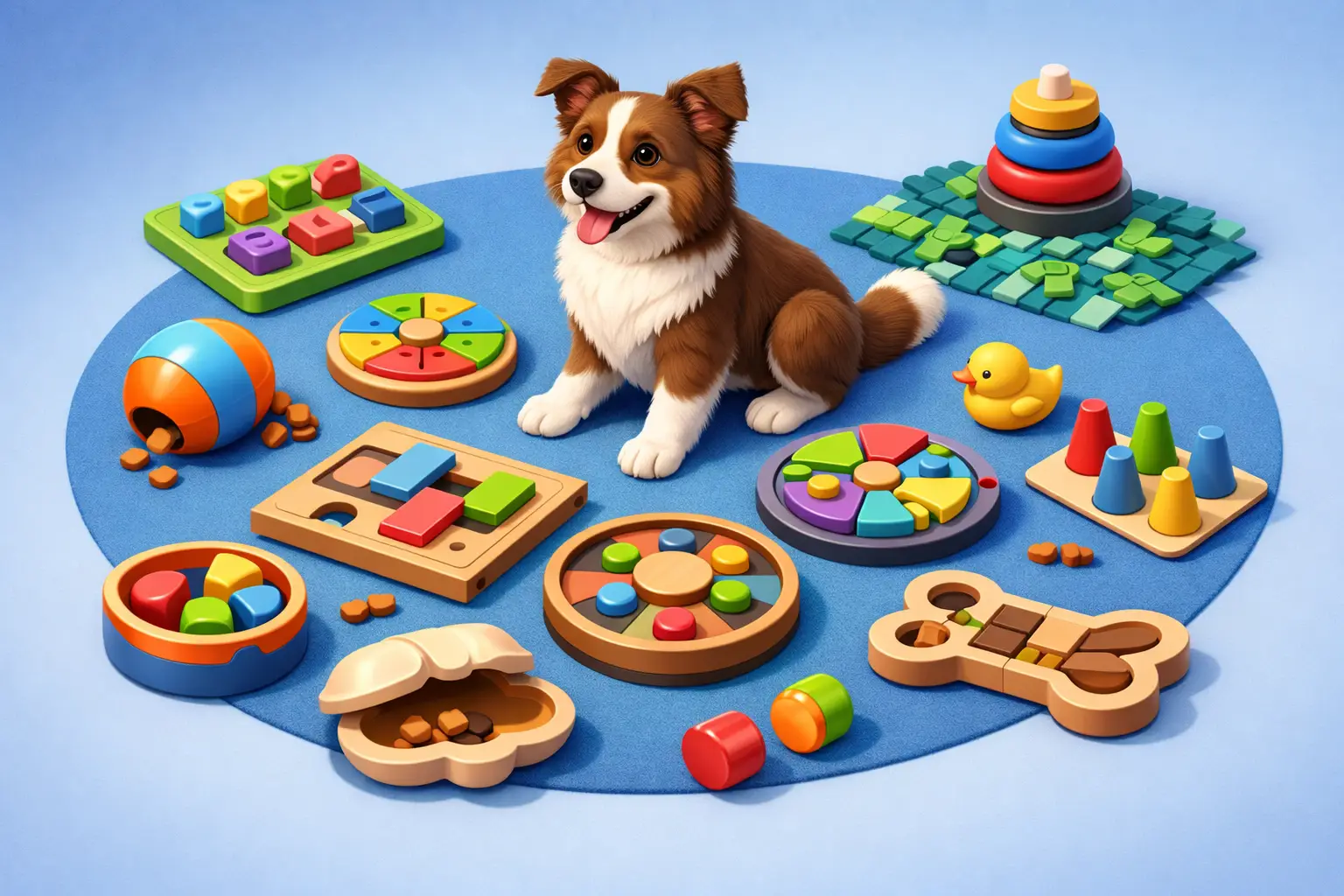
A tired dog is not always a fulfilled dog. Plenty of dogs can finish a long walk, come home, and still pace, bark, shadow you from room to room, or start redecorating the couch cushions with their teeth. That is usually your cue that physical exercise alone is not enough. Mental stimulation games to play with your dog can help fill that gap by giving your dog a job, a challenge, and a better way to use all that brainpower.
For many pet parents, this is the missing piece in a calmer home routine. A few smart games can help take the edge off boredom, reduce attention-seeking behavior, and make training feel less like a task and more like quality time. The best part is that most of these games do not require a huge setup or a perfect schedule.
Dogs are natural problem-solvers, sniffers, trackers, and observers. Even small companion breeds often need more than a quick potty break and a plush toy tossed across the living room. When that need goes unmet, dogs tend to create their own entertainment, and owners usually do not love the result.
Mental work asks your dog to focus, make choices, and stay engaged. That kind of effort can be especially helpful for bright breeds, young dogs, dogs stuck inside during bad weather, and seniors who may need gentler enrichment than a long hike. It also works well for nervous dogs because predictable brain games can build confidence without overstimulation.
That said, more stimulation is not always better. If your dog gets frantic around food, guards toys, or becomes too amped up by fast-moving games, choose calmer activities and keep sessions short. The goal is engaged and satisfied, not overexcited.
You do not need a dog sport setup or a trunk full of gear. The most effective games are often simple, repeatable, and easy to work into daily life.
This is one of the easiest ways to tap into your dog’s natural sniffing instincts. Start by showing your dog a treat, asking them to wait, and placing it a few feet away in plain sight. Release them with a simple cue like “find it.”
Once they understand the idea, make it harder. Hide treats behind a chair leg, under a towel edge, or in another room while your dog waits. Sniffing is deeply satisfying for most dogs, and this game is a strong option for rainy days, apartment living, and dogs who need lower-impact activity.
If your dog is brand new to scent games, keep the first rounds very easy. Success builds interest. Too much difficulty too soon can make the game feel frustrating instead of rewarding.
Take three cups, place a treat under one, and shuffle them slowly. Let your dog investigate and choose. Some dogs use their nose, some use their eyes, and some enthusiastically guess with a paw.
This game builds focus and impulse control, but it depends on your dog’s temperament. Food-motivated dogs often love it right away. Dogs who get impatient may need just two cups at first and very short rounds. Keep it light and cheerful rather than turning it into a test.
A snuffle mat or even a rolled towel sprinkled with kibble can turn breakfast into a small problem-solving session. Instead of eating in thirty seconds from a bowl, your dog has to sniff, search, and work through the fabric or folds.
This is especially useful for dogs who gulp meals, demand entertainment first thing in the morning, or need help settling in the evening. Feeding this way can make a routine moment feel much more enriching without adding much effort for you.
Hide a treat in one hand, present both closed fists, and let your dog choose. When they nudge or paw the correct hand, open it and reward them.
It is a simple game, but it teaches your dog to observe closely and use their nose with purpose. It is also a good fit for beginners because you can play it almost anywhere, including while waiting for dinner to heat up or during a quiet break in the day.
Many owners separate training from play, but dogs do not always see that distinction. If the activity is rewarding and engaging, it still works as enrichment.
Ask your dog to stay, then hide somewhere in the house and call them. When they find you, make it worth the effort with praise, treats, or a quick tug session.
This game strengthens recall, encourages problem-solving, and adds excitement to basic obedience. It is also a nice option for dogs who are strongly attached to their people, because it channels that attention into a purposeful search rather than clingy pacing.
If your dog has a small rotation of toys, start assigning names to them. Use one toy at a time first, repeating the name clearly before tossing it or rewarding interaction. Over time, place two toys down and ask for one by name.
Some dogs catch on quickly, especially if one toy is much more interesting than the other. Others need weeks of repetition. Either way, the process itself is mentally engaging because your dog is learning to connect words with objects.
Set out a few cardboard boxes, paper bags, or safe containers and hide treats in one or two of them. Let your dog search, sniff, and investigate.
This game offers a little more complexity than the cup game and works beautifully for curious dogs who like to problem-solve with their nose. Just supervise closely if your dog tends to shred and swallow cardboard. For some dogs, that destruction is half the fun, so you need to know whether your dog can handle the setup safely.
Outdoor enrichment can be more than fetch. In fact, some dogs get more benefit from thoughtful outdoor games than from repetitive ball chasing, which can leave them physically tired but mentally wound up.
In a yard or quiet patch of grass, scatter part of your dog’s kibble or a handful of treats and let them sniff through the area to find every piece. This turns a regular outdoor moment into a scent-rich search project.
It is a great fit for dogs who need help slowing down outside. If your dog is too distracted in busy environments, start in a calm area. If your dog guards food around other pets, play this one separately.
You can also build mini obstacle searches outdoors by hiding treats near safe objects like tree bases, planters, or low garden edges. The point is not to make it complicated. The point is to make your dog think.
The biggest mistake owners make is assuming enrichment has to be elaborate. It does not. A five- to ten-minute game done consistently often works better than a big weekend setup you never repeat.
Timing matters too. If your dog gets wild in the late afternoon, that is the moment to offer a sniffing game or food puzzle, not after the zoomies have already taken over the house. If mornings are rushed, use one easy game like which hand or a snuffle breakfast to create a calmer start.
Rotation helps. Dogs can lose interest if the exact same challenge appears every day in the exact same way. You do not need eight brand-new ideas every week. Just vary the location, difficulty, reward, or order.
Pay attention to your dog’s style. Some dogs love nose work. Some prefer interactive training. Some want a food reward every time, while others light up for praise or toy play. Smarter pet parenting is often less about doing more and more about noticing what actually works for the dog in front of you.
Enrichment can improve a lot, but it is not a cure-all. If your dog shows intense anxiety, destructive behavior that escalates, compulsive licking, reactivity, or major trouble settling, games may be only one piece of the solution. Training support, environmental changes, and routine adjustments may also be needed.
That is why the best home setup combines stimulation with structure. A thoughtful mix of walks, rest, chew time, short training sessions, and interactive play tends to create the most balanced result. Brands like Idylle Shop fit naturally into that approach because modern pet care works best when products, routines, and education support each other.
You do not need to overhaul your life to give your dog a richer day. Start with one game, make it easy, and notice what changes. Sometimes the difference between a restless dog and a settled one is just ten focused minutes and a chance to use their brain.

We’re here to help! Find quick answers or reach out to our team anytime.







Leave a comment