
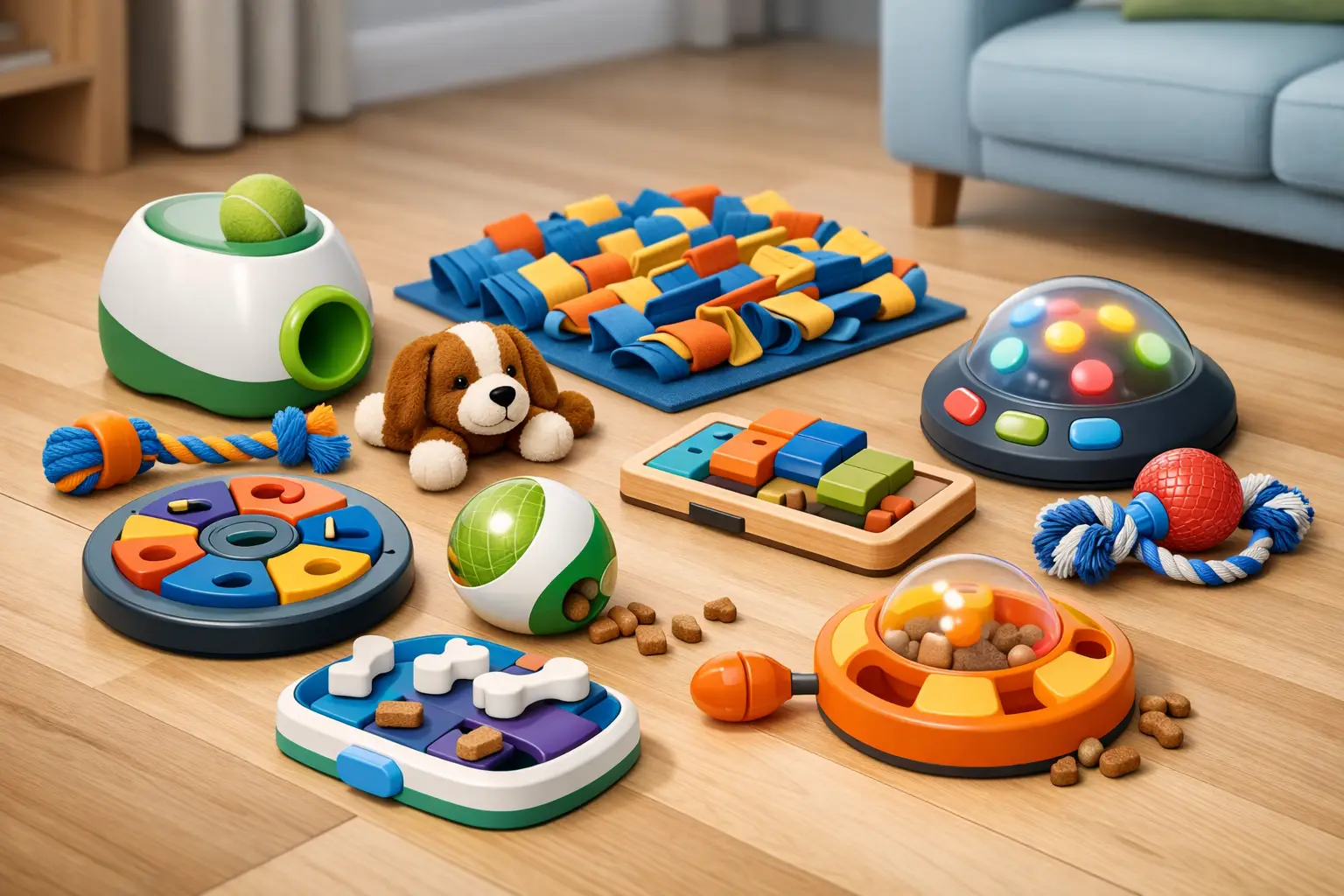
A chewed slipper usually is not a shoe problem. It is a boredom problem.
That is why dog toys to stimulate mind matter so much in a modern home. A dog that never gets a mental challenge will often create one – by barking at every sound, pacing between rooms, shredding pillows, or shadowing you from the kitchen to the couch. Physical exercise helps, but many dogs also need work for their brain. The right toy can turn restless energy into focus, confidence, and calmer behavior.
For pet parents who want a home that feels more balanced, this is one of the simplest upgrades you can make. Not every toy labeled interactive will truly engage your dog, though. Some are too easy, some create frustration, and some only hold attention for a few minutes. The best choice depends on your dog’s age, breed tendencies, chew style, and daily routine.
Mental enrichment is not just a bonus for high-energy dogs. It supports emotional regulation, problem-solving, and healthy independence. When dogs have appropriate ways to investigate, sniff, nudge, lick, and search, they use natural behaviors in a productive way.
This is especially helpful for dogs who spend part of the day alone, adjust poorly to new routines, or seem tired and wired at the same time. A stimulating toy can slow them down, give them a clear task, and reduce the kind of aimless energy that often turns into nuisance behavior.
There is also a practical angle. A good enrichment toy can buy you 10 to 30 focused minutes while you answer emails, cook dinner, or reset the house. That does not replace walks, training, or connection, but it does make daily life easier and more organized.
Puzzle feeders are one of the best entry points because they turn mealtime into a job. Instead of finishing dinner in 45 seconds, your dog has to slide, paw, nose, or rotate parts to access food.
These work well for dogs who inhale meals, seem underchallenged, or need help slowing down. Start simple. If the puzzle is too difficult, your dog may quit or get frustrated. The goal is engagement, not confusion.
A snuffle mat taps into scent work, which is naturally satisfying for most dogs. Kibble or treats are hidden in soft fabric layers, and your dog has to sniff them out.
This style is ideal for nervous dogs, seniors, and beginners because it is low impact and calming. It is also a smart option for rainy days or apartment living when you want an indoor activity that feels meaningful rather than noisy.
These toys reward movement. Your dog nudges or rolls the toy, and food drops out over time. For many dogs, this creates a nice balance between physical activity and mental effort.
They tend to work best for dogs that enjoy chasing and pushing objects around. In smaller spaces, choose a quieter design so enrichment does not sound like furniture being rearranged for half an hour.
Licking has a soothing effect for many dogs. A fillable toy with wet food, yogurt, pumpkin, or a dog-safe spread can turn a short snack into a longer calming ritual.
These are useful during stressful moments, such as guests arriving, grooming prep, crate training, or downtime after a walk. Freezing the filling makes the challenge last longer. The trade-off is cleanup, so this works best when you are comfortable rinsing and refilling regularly.
Some dogs love the hunt more than the chew. Hide-and-seek plush toys, where small toys are tucked inside a larger one, encourage searching, pulling, and problem-solving.
They are a good fit for gentle to moderate chewers and dogs that enjoy stalking or digging behaviors. They are usually not the right pick for heavy chewers who destroy plush material in minutes.
Tug is often treated like pure play, but it can be excellent mental work when used with structure. A tug toy becomes much more enriching when your dog practices wait, take it, drop it, and re-engage.
This turns a simple game into impulse control training. It is especially useful for energetic dogs that need help channeling excitement into clear rules. The toy itself is only part of the value. The interaction creates the challenge.
Chewing is a legitimate need, not a bad habit. A durable chew toy gives your dog a focused outlet and can reduce destructive chewing elsewhere.
For some dogs, this is more regulating than flashy puzzle toys. It is less about solving a problem and more about settling the nervous system through repetitive, satisfying work. Just be honest about your dog’s chew strength and choose a material designed for it.
Scent-based toys ask dogs to find hidden treats through smell rather than speed. That distinction matters. Scent work often tires dogs in a quieter, more centered way than high-arousal play.
These toys are especially valuable for smart dogs who seem to get bored fast. They offer novelty without requiring a huge setup, which makes them realistic for everyday use.
The best toy is not the one with the most features. It is the one your dog will use successfully and safely.
Start with your dog’s natural style. If your dog sniffs every inch of the sidewalk, scent and foraging toys usually make sense. If your dog wants to chew everything in sight, prioritize durable chew options and fillable designs. If your dog is highly social and toy-driven, interactive play toys may outperform solo puzzles.
Age matters too. Puppies often need simpler challenges and softer materials, plus supervision while they learn how to play appropriately. Adult dogs can usually handle more complexity. Seniors may still love enrichment, but they often do better with lower-impact formats like licking, sniffing, and easy puzzles.
Then think about frustration level. A toy that is too easy becomes background clutter. A toy that is too hard gets abandoned. The sweet spot is achievable effort. Your dog should need to work, but still feel rewarded enough to stay engaged.
One common mistake is offering the same toy the same way every day. Even a great enrichment tool can lose value when it becomes predictable. Rotation helps. Putting a few toys away and bringing them back later keeps interest high without requiring a huge collection.
Another mistake is assuming more excitement means better stimulation. Some dogs get amped up by certain toys and end the session more hyper than before. If your goal is a calmer household, choose activities that promote focus, sniffing, licking, or steady problem-solving rather than constant frenzy.
Safety is another area where good intentions can slip. Always supervise when introducing a new toy, especially if your dog is a strong chewer or tends to tear pieces off quickly. Check toys regularly for wear. Mental enrichment should reduce stress, not create a vet visit.
You do not need a complicated schedule. What works best is tying stimulation to moments that already happen in your day.
A puzzle feeder at breakfast can replace bowl feeding. A lick toy can become part of your dog’s evening wind-down. A snuffle mat can help during bad weather or busy workdays. A short scent game before guests arrive can redirect nervous energy into something purposeful.
This is where curated pet care makes a difference. Instead of buying random toys and hoping one sticks, choose a few that serve different functions: one for calming, one for active problem-solving, and one for satisfying chew needs. That approach feels more intentional, looks less cluttered in the home, and usually delivers better results.
At Idylle Shop, that smarter-living mindset is exactly what modern pet parenting should feel like – less chaos, more ease, and tools that genuinely support your dog’s well-being.
Even the best dog toys to stimulate mind are part of the picture, not the whole picture. If your dog is showing intense anxiety, nonstop destruction, compulsive behaviors, or sudden changes in mood, enrichment alone may not solve it.
Sometimes the real issue is lack of sleep, too little physical exercise, inconsistent boundaries, or a medical concern. In those cases, toys can help support a routine, but they should sit alongside training, rest, and veterinary guidance when needed.
A well-chosen toy will not magically transform your dog. What it can do is give your dog a better job to do inside your home. And often, that small shift is what turns a restless day into a calmer one for both of you.

We’re here to help! Find quick answers or reach out to our team anytime.







Leave a comment