
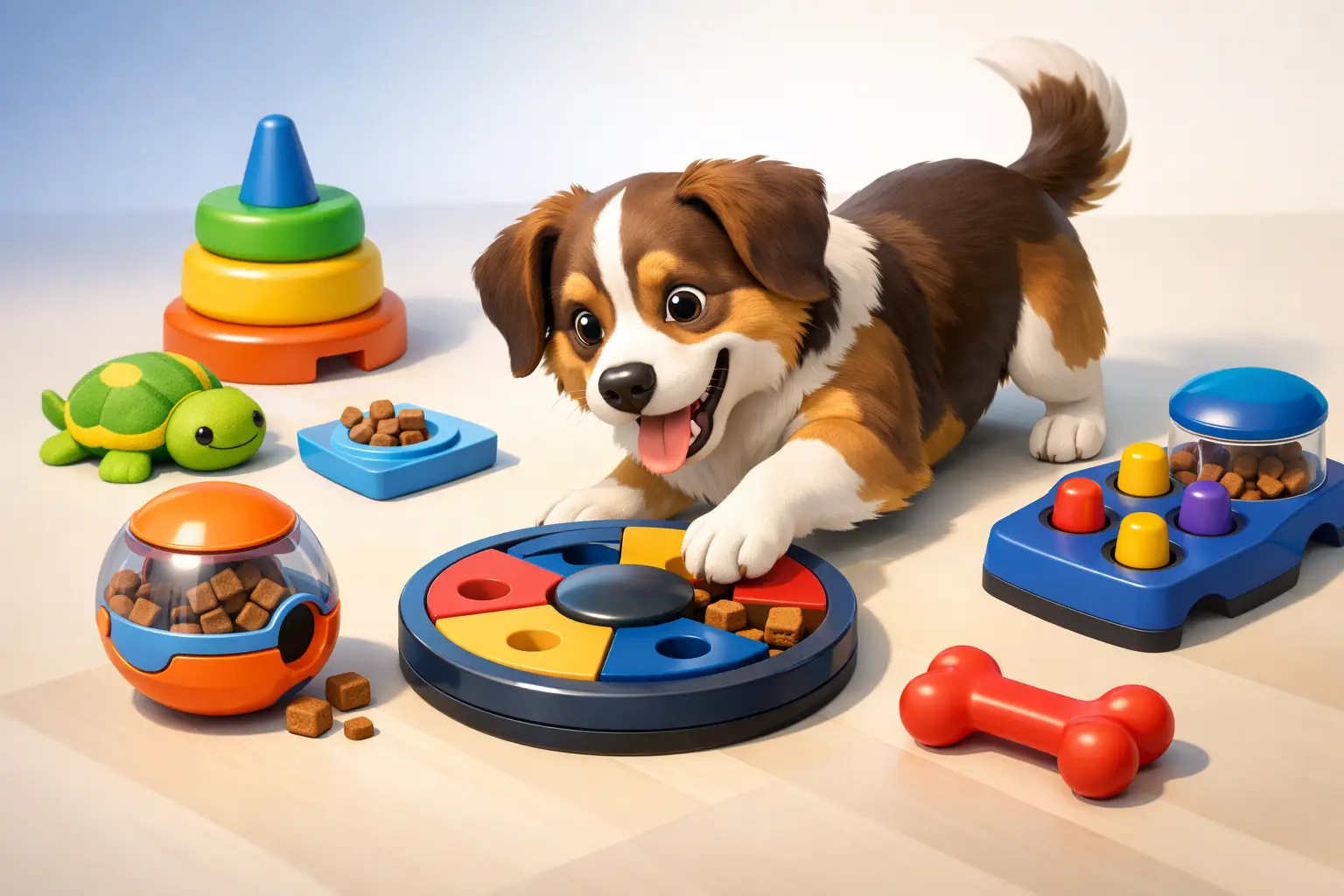
A bored dog rarely keeps that boredom to themselves. It shows up as shredded pillows, nonstop barking, pacing during meetings, or that look that says, “I need something to do right now.” So, are interactive toys good for dogs? In many homes, yes – they can be one of the simplest ways to support mental stimulation, reduce stress, and make daily life feel more balanced for both dogs and their people.
That said, interactive toys are not automatically good just because they are labeled enriching. The right toy can help a dog settle, problem-solve, and stay engaged. The wrong toy can frustrate them, overwhelm them, or become another forgotten item in the basket. Like most smart pet-care choices, the value comes down to fit, routine, and supervision.
Interactive toys are more than a trend when they match a real need. Dogs are natural problem-solvers. They sniff, search, chew, paw, chase, and work for rewards. In a modern home, they often have fewer chances to use those instincts in meaningful ways. An interactive toy helps fill that gap by turning play into a small job with a payoff.
That matters because physical exercise alone is not always enough. A dog can go for a walk and still come home mentally under-stimulated. This is especially common with intelligent breeds, young dogs, and pets left alone for part of the day. A puzzle feeder, treat-dispensing ball, snuffle mat, or tug toy with a challenge component can give their brain something to focus on.
There is also a wellness angle that many owners notice quickly. Dogs who have healthy outlets for energy often appear calmer afterward. They may settle more easily, spend less time seeking constant attention, and show fewer boredom-driven behaviors. That does not make interactive toys a fix for every issue, but it does make them a practical part of a more organized pet routine.
The biggest benefit is mental enrichment. Dogs need more than movement – they need engagement. When a toy asks them to nudge, sniff, manipulate, or think through a sequence, it activates parts of their day that a standard plush toy does not.
Interactive toys can also help slow down fast eaters when food is part of the game. Instead of inhaling a meal in under a minute, the dog works through it gradually. For some pets, that creates a calmer feeding experience and extends satisfaction after eating.
Another advantage is emotional regulation. Dogs with mild anxiety or restlessness sometimes do better when they have a predictable activity to focus on. A thoughtfully chosen toy can create a small routine: settle on a mat, work for treats, relax afterward. That rhythm is useful in busy households, apartments, and work-from-home settings where constant stimulation is not realistic.
For pet parents, the benefit is often practical as much as emotional. Interactive toys can buy you a little breathing room while still supporting your dog’s well-being. That does not replace walks, training, or affection, but it can make the day run more smoothly.
There are trade-offs, and this is where realistic expectations matter. Some dogs do not enjoy certain types of challenges. A toy that looks clever on the shelf may feel confusing or annoying to a dog who prefers straightforward play. If the difficulty is too high, the result may be frustration instead of enrichment.
Safety is another factor. Not every toy is suited for aggressive chewers, and some designs have removable parts that can become hazards if left unsupervised. Soft materials may be perfect for one dog and quickly destroyed by another. Size matters too. A toy that is too small can be risky, while one that is too large may be ignored.
It is also possible to rely on toys as a substitute for deeper needs. If a dog is struggling with separation anxiety, lack of training, chronic under-exercise, or medical discomfort, an interactive toy alone will not solve the problem. It can help support a broader routine, but it should not be expected to carry the whole load.
Most dogs can benefit from some form of interactive play, but the type should reflect their personality and habits. A scent-driven dog may love sniff-based games more than visual puzzles. A heavy chewer may need durable treat toys rather than fabric-based enrichment. A nervous dog may respond better to simple, confidence-building toys than to complex puzzles.
Pay attention to how your dog already plays. Do they enjoy searching for treats, working for food, carrying objects, or chewing for long stretches? Those clues tell you more than product marketing ever will.
Age matters as well. Puppies often benefit from beginner-level toys that encourage exploration without too much complexity. Adult dogs may enjoy more challenge and variety. Senior dogs can still benefit, especially from slow, low-impact options that engage the brain without requiring intense movement.
The best choice usually comes down to three things: difficulty, durability, and motivation. If a toy is too easy, your dog may lose interest fast. If it is too hard, they may give up. Start simple, especially if your dog is new to puzzle-style play, and build up over time.
Motivation is key. Food-based toys tend to have the strongest immediate appeal, especially for beginners. If your dog is not highly food motivated, look for toys that involve movement, squeaking, tugging, or hide-and-seek play.
Durability should match chewing style, not just size or breed. A small but determined chewer can destroy a toy faster than a larger dog with gentler habits. Look for sturdy construction, easy-to-clean materials, and shapes that do not create obvious break-off points.
A good rule is to think of interactive toys as part of your home system. Choose pieces that fit your schedule, your dog’s energy, and your tolerance for cleanup. The most beautiful toy is still a bad purchase if it adds stress instead of ease.
They can be, especially when used with intention. For high-energy dogs, interactive toys create a productive outlet that is different from running or rough play. They encourage focus, patience, and problem-solving, which can be surprisingly tiring in the best way.
For anxious dogs, the answer is more nuanced. Some calming toys work well because repetitive licking, chewing, or sniffing can help dogs decompress. But a very stimulating puzzle may have the opposite effect if the dog is already tense. In those cases, easier enrichment often works better than a complicated challenge.
Routine matters here. Giving a dog the same calming toy before guests arrive, during crate time, or while you start your workday can create a sense of predictability. That structure often supports emotional comfort more than novelty alone.
The smartest approach is rotation, not overload. If every toy is available all the time, many dogs stop noticing them. Keeping a smaller selection in circulation can help maintain interest and make play feel fresh without constant buying.
It also helps to introduce new toys with a little support. Show your dog how the toy works, let them experience early wins, and avoid turning enrichment into a test. The goal is confident engagement, not proving how smart they are.
Supervision is especially important in the beginning. Watch how your dog interacts, how long they stay interested, and whether the toy holds up safely. Over time, you will learn which toys truly improve your routine and which ones are better in theory than in practice.
For many modern pet parents, this is where a curated approach makes the biggest difference. Instead of collecting random items, choose a few well-matched tools that support feeding, calming, and independent play. That tends to create a cleaner, simpler, more elevated experience for your dog and your home.
At Idylle Shop, that idea sits at the center of smarter pet living: the right products should not just entertain your dog for a few minutes. They should make pet parenting easier, support wellness, and fit naturally into daily life.
Interactive toys are good for dogs when they respect the dog in front of you – their energy, instincts, confidence, and needs. The best ones do not just keep a dog busy. They give them something satisfying to do, and that can change the feel of an entire day.

We’re here to help! Find quick answers or reach out to our team anytime.







Leave a comment